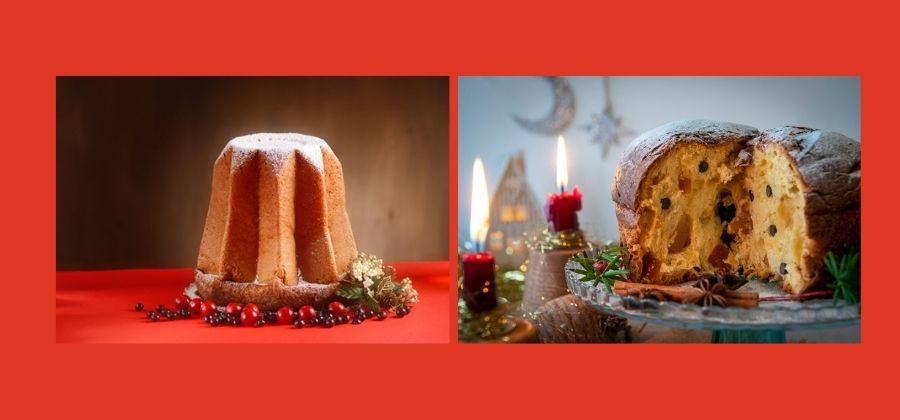
In Italy there are no Christmas holidays without at least one panettone or a pandoro in every family. Partly due to tradition and partly because it has now become a culinary habit, Christmas without these sweets on the tables is practically impossible. The market value of pandoro and panettone boasts figures with many zeros.
Consider that in 2018 the export of pandoro and panettone generated a treasure of over five hundred million euros. Leading the countries that import these two sweets is France, followed by Germany and Great Britain. Outside the EU, the United States wins the title of foreign country that consumes the most Italian panettone and pandoro.
Who wins between the two desserts? Obviously, panettone remains the most exported dessert, as well as the most loved one, both in Italy and abroad.
Pandoro was born in Verona in 1894, from the idea of Domenico Melegatti, the popular and leading creator of the confectionery industry.
According to legend, Panettone was born in Milan during the reign of Ludovico il Moro. It is said that on Christmas Eve, the chef of the Sforza house burned the cake prepared for the banquet. The scullery boy, a certain Toni, thus decided to remedy the damage. He worked yeast several times with flour, eggs, sugar, raisins and candied fruit, until a soft dough was obtained. The result was amazing: the Sforza family appreciated it so much that they decided to call it, in honor of him, “pan de Toni”, from which the term “panettone” derives.
The ingredients used in the traditional recipes of Pandoro and Panettone are more or less similar so what distinguishes them is the processing method. Panettone is the dessert embellished with candied fruit and raisins while the pandoro is the one in the shape of a soft star dusted with powdered sugar.
Traditional Pandoro is prepared with three processes based on mother yeast, brewer’s yeast, eggs, butter, vanilla and powdered sugar.
Panettone, on the other hand, is a dessert made with water, 0 flour, salt, fresh eggs, milk, butter, sugar, dry orange and citron, raisins, vanilla and mother yeast.
If you are super greedy you can cut it in slices and spread on top whipped sweetened mascarpone, pastry cream, jams, or zabaglione or use it both to create dessert such as tiramisu, trifle or pancotto.
In any case, it involves many working hours that require surgical precision in dosage, altering the leavening and dough phases that give life to soft desserts.
As with any dessert, panettone and pandoro can also be paired with wines, below our recommendation:
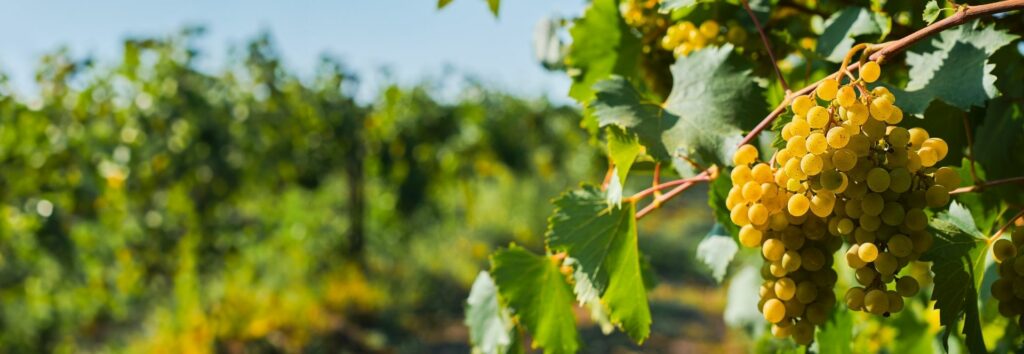
Moscato d’Asti D.O.C.G. Bel Piano Cascina Fonda for Pandoro
Passirò I.G.P. Lazio bianco Tenuta Montiano Famiglia Cotarella for Panettone
For any further information please contact me at
stefaniamontalbano@carlozucchetti.it