

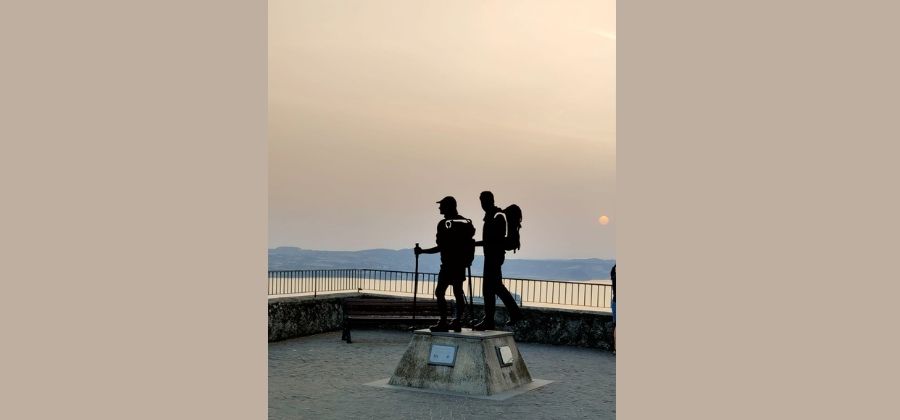
The Via Francigena is an historic medieval route, an ancient trail that takes pilgrims to Rome on a journey from Canterbury, England, across the channel, to France and through Switzerland to Italy. The name Francigena indicates the road from the “Land of the Franks,” carried pilgrims across the Alpine Mountains towards Rome. It measures approximately 1.800 km, 80 stages and generally requires more than 90 days for pilgrims to complete the trek.
Even if it is mostly known as a walking itinerary, it’s possible to ride it by bicycle. The Via Francigena route passes through unique landscapes, takes walkers through some of the most stunning regions in Europe, such as the Dover cliffs, the Great War battlefields of Northern France, the Champagne region, Lake Geneva and the mighty Alps, the 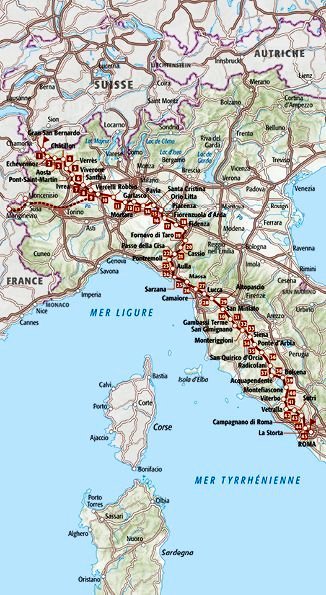 Apennines, the picturesque hills of Tuscany and finally Rome, the eternal city. In addition , many pilgrims, having arrived in Rome, continued along the Via Appia down to Puglia, where they embarked for Jerusalem. Today, pilgrims visit the Vatican to see the Pope every Wednesdays in Saint Peter’s Square, or attend the blessing, on Sunday. Back then pilgrims were poor people who made the pilgrimage to obtain indulgences for themselves or for their loved ones, even the deceased. They traveled with few things in their saddlebags, hoping for the generosity of the inhabitants of the places crossed. The wealthiest stopped in taverns, where most of the time food served was very salty to encourage people to drink more wine. Wine was the main beverage, it was considered safer to drink to hydrate rather than a glass of water because the alcohol content of the wine eliminated the risk of bacterial contamination. The “pilgrim’s menu” was based on soups and broths such as: cereal soup, dried legume soup, but also cured meats, cheeses and eggs. The main food was bread, thanks to its conservation capacity. However, along the way, hospitality was not lacking, running into some monastery for a bowl of hot soup, bread, wine, and a bed. Dinner – served at dusk – included also grilled chestnuts and hot turnips. Obviously, no cutlery at that time. The following morning the pilgrims, after a quick snack based on bread, fruit and wine, resumed their journey. Today is still possible walk through the Via Francigena, but unlike then, it is possible to find refreshment between the stages, several places where to rest, like B&B to spend less, and eat local food, thermal baths for a few euros or even for free, like in Viterbo. The Via Francigena is not technically a difficult route, apart from the mountain stretches of northern Italy, the difficulties represented by the walk are not so much given by the differences in height, but rather by the length of the stages. It is recommended to do it in the spring and autumn, but if you decide to walk the path in the summer, due to the high temperatures it would be better to leave before dawn.
For any further information contact me at
stefaniamontalbano@carlozucchetti.it